In June, the United States and Iran signed a memorandum of understanding intended to help end hostilities. Yet the conflict has continued, with both sides trading strikes and the Strait of Hormuz effectively blocked. Fareed Zakaria speaks with expert Sanam Vakil about the war’s repeated shifts between diplomacy and escalation. Retired Lieutenant General Karen Gibson also offers analysis. The discussion asks what provisions would have to be included in a deal for the fighting to end.

 CNN★★★★★2026-08-04 23:03
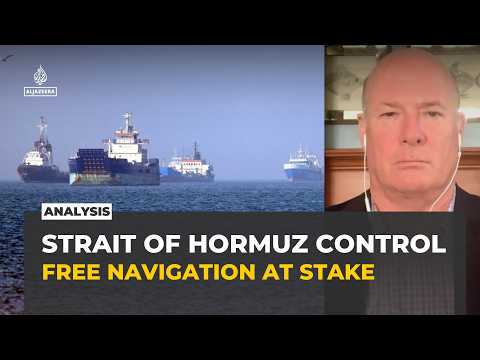
Former Pentagon director for Arabian Peninsula Affairs David Des Roches said negotiations over the Strait of Hormuz should focus first on restoring freedom of navigation for commercial shipping. He argued that Iran is using control of the waterway as leverage to deter future US attacks by making them carry what he called an excessively high cost. Des Roches described attacks on neutral civilian vessels as “a textbook definition of a war crime” and referred to charges for clearing mines laid by Iran.
The United States is voicing optimism that an agreement to reopen the Strait of Hormuz could be reached as soon as today or tomorrow. Iran’s president, meanwhile, accused Washington of failing to recognize its own limits. He said Tehran’s actions are solely aimed at defending its borders and insisted that Iran does not intend to prolong the conflict. The optimism among US officials is prompting questions about what is driving their assessment.
U.S. Treasury Secretary Bessent says the Strait of Hormuz crisis may see a breakthrough, with an agreement to reopen the waterway possibly coming soon. Secretary of State Rubio says talks between the United States and Iran over the strait have advanced, but calls denuclearizing Iran’s regime the “final deal.” Officials on both sides say airstrikes have killed civilians in Russia and Ukraine. In the Democratic Republic of Congo, more than 1,700 people have been confirmed dead in an Ebola outbreak described as the fastest-spreading on record.

 VOA Chinese★★★★★2026-08-04 22:51
US Secretary of State Marco Rubio says negotiations have made progress toward reopening the Strait of Hormuz. His statement points to movement in the talks but gives no details about what was agreed. It also does not indicate when the waterway might reopen.

Former National Security Council director Rich Goldberg assesses President Donald Trump’s warning to Iran. Trump said Tehran would receive “every last chance” before a possible “decapitation” action. The warning comes as geopolitical tensions continue to rise. Goldberg’s analysis focuses on the implications of Trump’s language toward Iran.

 Fox News★★★★☆2026-08-04 18:00